ששה סדרי משנה בשנה
Mishnah in a Year · Daf-a-Day order, Visualized
1
מסכת שבת · פרק א
Mishnah Shabbos, Perek 1 · Seder Moed · today: mishnayos 6-11 of 11
11 mishnayos · shiur by mishnaportal.co.za
1:65 lawsMay flax, wool and traps be set up just before Shabbat to keep working on Shabbat?
Infographic for Shabbos 1:6: FLAX, WOOL AND TRAPS
בֵּית שַׁמַּאי אוֹמְרִים, אֵין נוֹתְנִין אוּנִין שֶׁל פִּשְׁתָּן לְתוֹךְ הַתַּנּוּר, אֶלָּא כְּדֵי שֶׁיַּהְבִּילוּ מִבְּעוֹד יוֹם,
Beit Shammai say: One may only place bundles of combed flax inside the oven on Shabbat eve if there is sufficient time so that they will be heated while it is still day.

וְלֹא אֶת הַצֶּמֶר לַיּוֹרָה, אֶלָּא כְדֵי שֶׁיִּקְלֹט הָעַיִן.
And one may only place wool into the dyer’s kettle if there is sufficient time for the wool to absorb the dye while it is still day.
וּבֵית הִלֵּל מַתִּירִין.
And Beit Hillel permit doing so.
בֵּית שַׁמַּאי אוֹמְרִים, אֵין פּוֹרְשִׂין מְצוּדוֹת חַיָּה וְעוֹפוֹת וְדָגִים, אֶלָּא כְדֵי שֶׁיִּצּוֹדוּ מִבְּעוֹד יוֹם.
Beit Shammai say: One may spread traps for an animal and birds and fish only if there is sufficient time remaining in the day for them to be trapped in them while it is still day,
וּבֵית הִלֵּל מַתִּירִין:
and Beit Hillel permit doing so even if there is not sufficient time remaining in the day.
1:72 lawsMay one sell to a gentile or help load his donkey late on Friday?
Infographic for Shabbos 1:7: SELLING TO A GENTILE ON FRIDAY
בֵּית שַׁמַּאי אוֹמְרִים, אֵין מוֹכְרִין לַנָּכְרִי וְאֵין טוֹעֲנִין עִמּוֹ וְאֵין מַגְבִּיהִין עָלָיו, אֶלָּא כְּדֵי שֶׁיַּגִּיעַ לְמָקוֹם קָרוֹב.
Beit Shammai say: One may only sell an item to a gentile on Shabbat eve, and one may only load a burden on his donkey with him, and one may only lift a burden on him if there remains sufficient time for the gentile to arrive to a near place prior to Shabbat, and the Jew will play no role in the performance of a prohibited labor by the gentile on Shabbat.
וּבֵית הִלֵּל מַתִּירִין:
And Beit Hillel permit doing so.
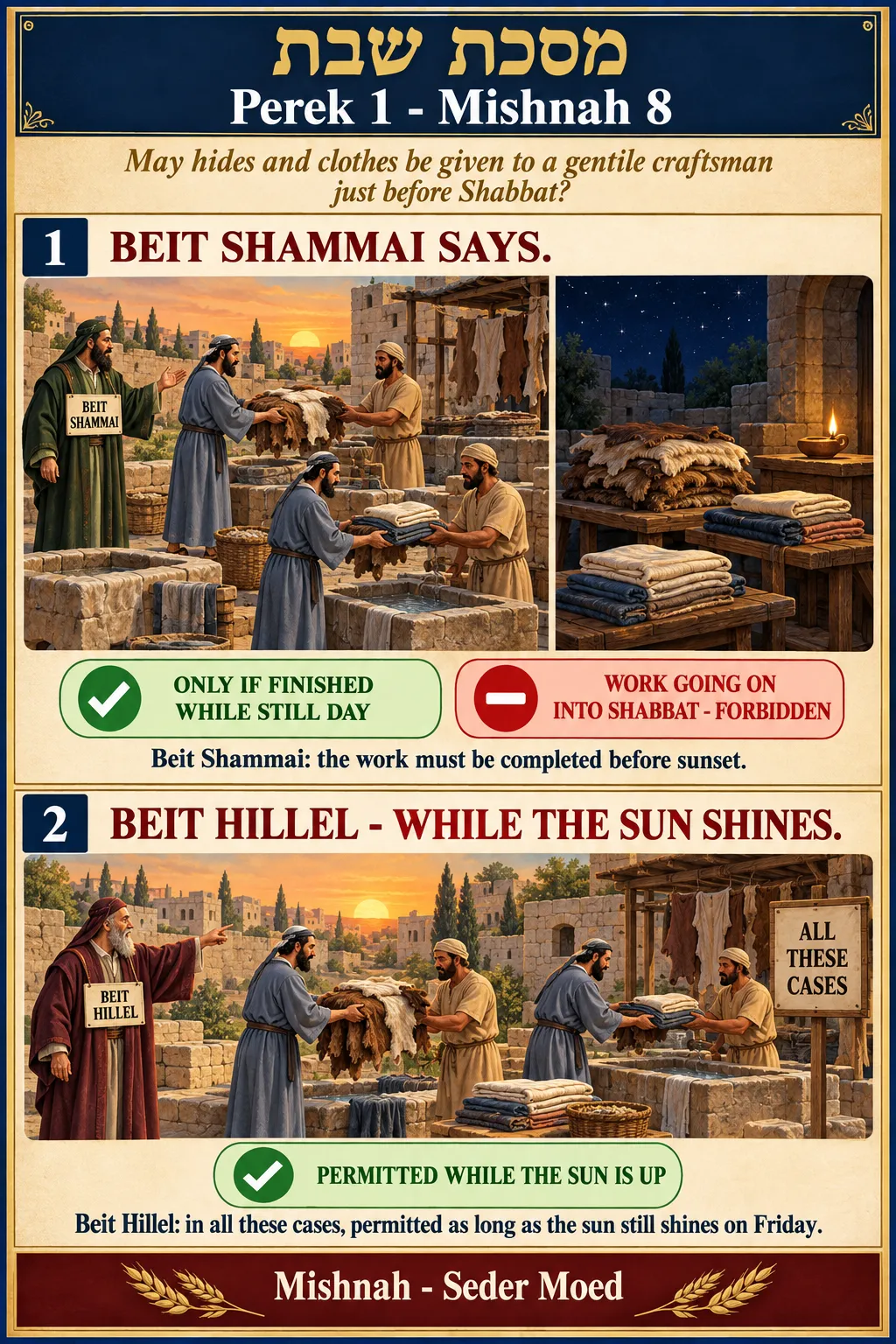
1:82 lawsMay hides and clothes be given to a gentile craftsman just before Shabbat?
Infographic for Shabbos 1:8: THE GENTILE TANNER AND LAUNDERER
בֵּית שַׁמַּאי אוֹמְרִים, אֵין נוֹתְנִין עוֹרוֹת לְעַבְּדָן וְלֹא כֵלִים לְכוֹבֵס נָכְרִי, אֶלָּא כְּדֵי שֶׁיֵּעָשׂוּ מִבְּעוֹד יוֹם.
Beit Shammai say: One may not give skins to a gentile tanner, nor clothes to a gentile launderer, unless there is sufficient time for work on them to be completed while it is still day, before Shabbat begins.
וּבְכֻלָּן בֵּית הִלֵּל מַתִּירִין עִם הַשָּׁמֶשׁ:
And in all of them Beit Hillel permit doing so with the sun, i.e., as long as the sun is shining on Friday.
1:93 lawsHow early did Rabban Gamliel's house send out laundry, and which presses may be loaded before Shabbat?
Infographic for Shabbos 1:9: WHITE LAUNDRY AND THE PRESSES
אָמַר רַבָּן שִׁמְעוֹן בֶּן גַּמְלִיאֵל, נוֹהֲגִין הָיוּ בֵּית אַבָּא שֶׁהָיוּ נוֹתְנִין כְּלֵי לָבָן לְכוֹבֵס נָכְרִי שְׁלשָׁה יָמִים קֹדֶם לַשַּׁבָּת.
Rabban Shimon ben Gamliel said: The ancestral house of my father, the dynasty of Nesi’im from the house of Hillel, was accustomed to give its white clothes to a gentile launderer no fewer than three days before Shabbat.
וְשָׁוִין אֵלּוּ וָאֵלּוּ, שֶׁטּוֹעֲנִין קוֹרוֹת בֵּית הַבַּד
And, however, these, Beit Shammai, and those, Beit Hillel, agree that, ab initio, one may load the beam of the olive press on the olives on Shabbat eve while it is still day, so that the oil will continue to be squeezed out of the olives on Shabbat.
וְעִגּוּלֵי הַגָּת:
So too, one may load the circular wine press to accelerate the process of producing wine from the grapes.
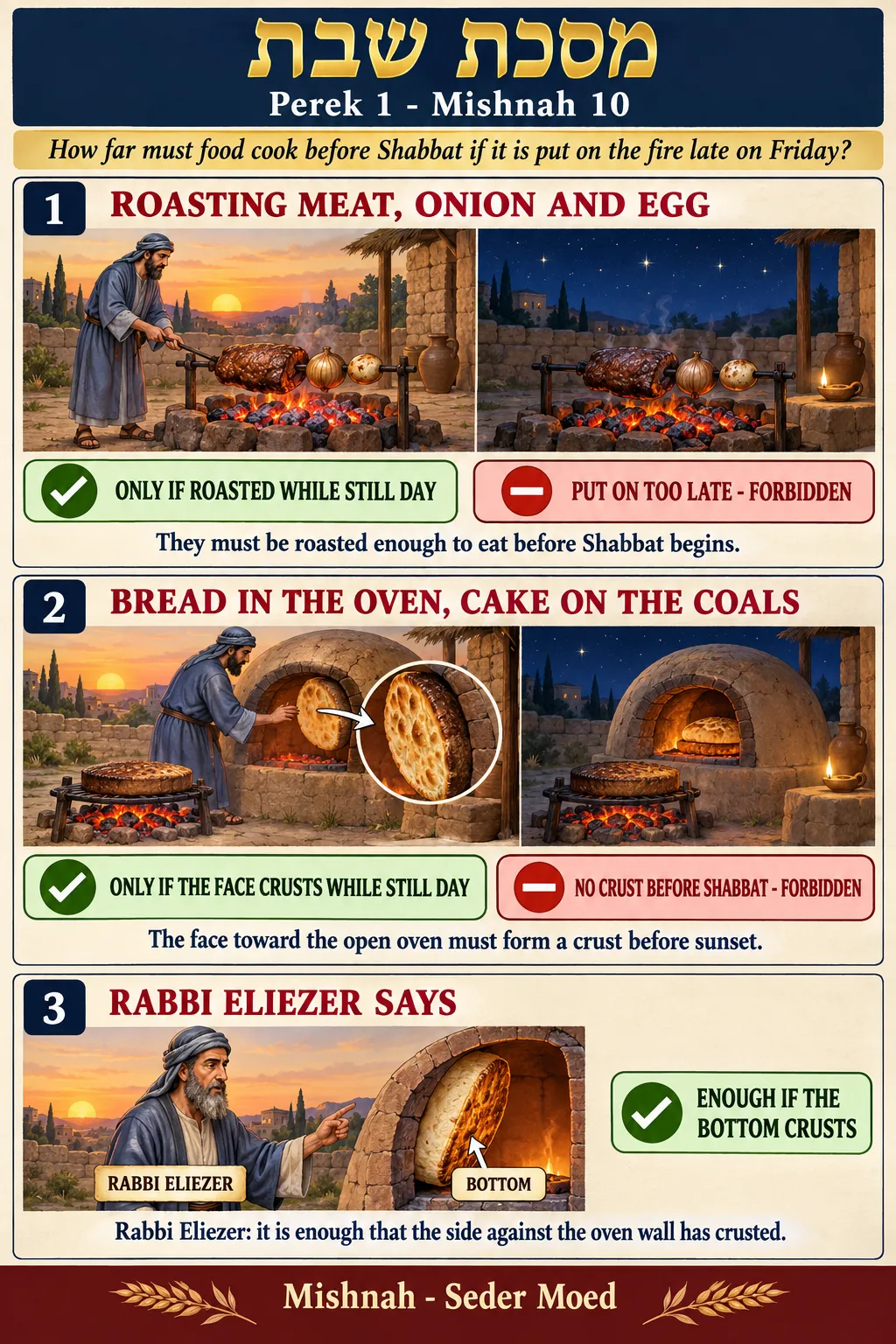
1:103 lawsHow far must food cook before Shabbat if it is put on the fire late on Friday?
Infographic for Shabbos 1:10: ROASTING AND BAKING AT NIGHTFALL
אֵין צוֹלִין בָּשָׂר, בָּצָל, וּבֵיצָה, אֶלָּא כְּדֵי שֶׁיִּצּוֹלוּ מִבְּעוֹד יוֹם.
This mishna enumerates actions that may only be performed on Shabbat eve if the prohibited labor will be totally or mostly completed while it is still day. One may only roast meat, an onion, or an egg if there remains sufficient time so that they could be roasted while it is still day.
אֵין נוֹתְנִין פַּת לַתַּנּוּר עִם חֲשֵׁכָה, וְלֹא חֲרָרָה עַל גַּבֵּי גֶחָלִים, אֶלָּא כְּדֵי שֶׁיִּקְרְמוּ פָנֶיהָ מִבְּעוֹד יוֹם.
One may only place dough to bake into bread in the oven on Shabbat eve at nightfall, and may only place a cake on the coals, if there is time enough that the surface of this cake or bread will form a crust while it is still day.
רַבִּי אֱלִיעֶזֶר אוֹמֵר, כְּדֵי שֶׁיִּקְרֹם הַתַּחְתּוֹן שֶׁלָּהּ:
Rabbi Eliezer says: Enough time so that its bottom crust should harden, which takes less time.
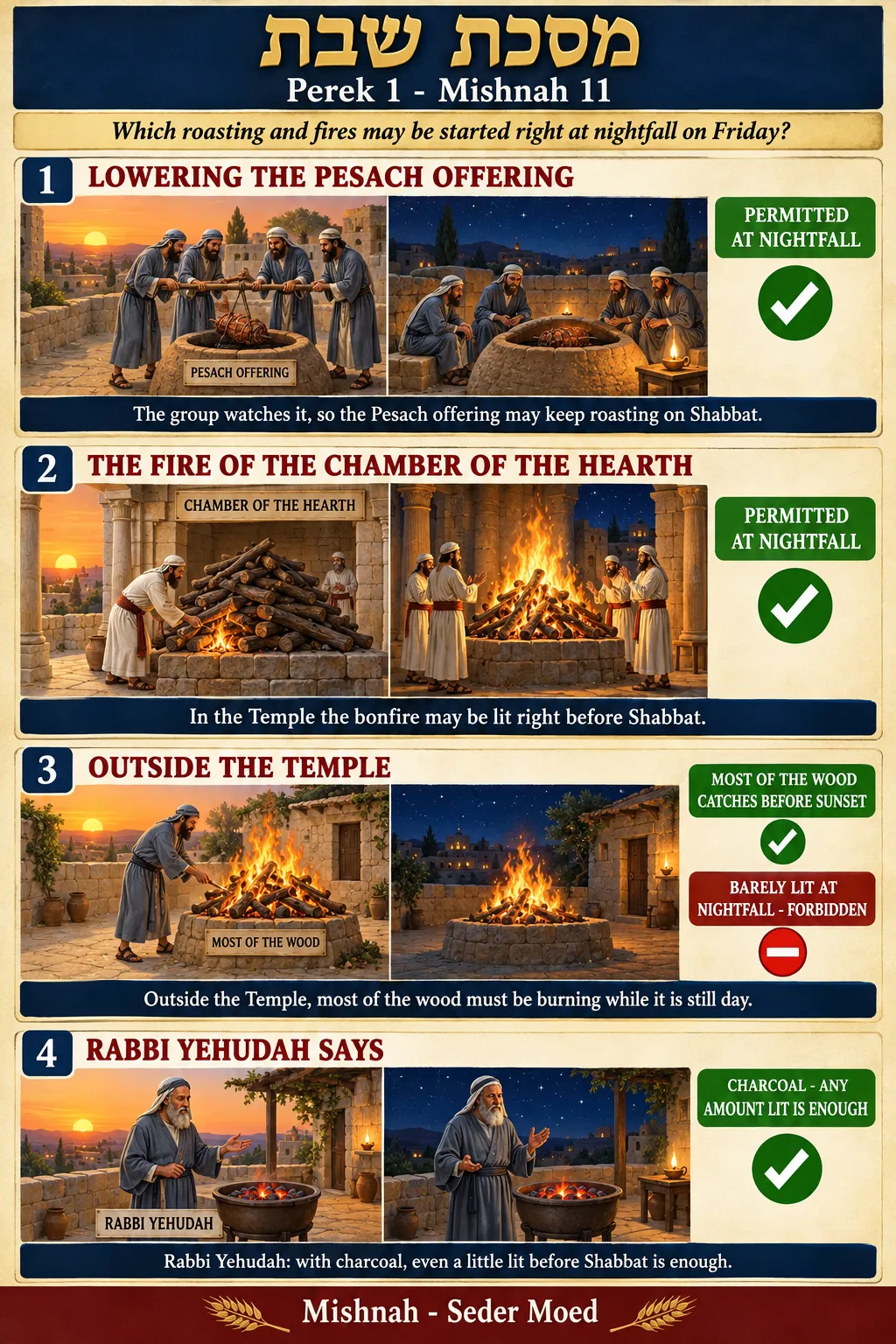
1:114 lawsWhich roasting and fires may be started right at nightfall on Friday?
Infographic for Shabbos 1:11: THE PESACH OFFERING AND THE TEMPLE FIRE
מְשַׁלְשְׁלִין אֶת הַפֶּסַח בַּתַּנּוּר עִם חֲשֵׁכָה.
However in a case that is an exception, one may, ab initio, lower the Paschal lamb into the oven on Shabbat eve at nightfall, so that its roasting is completed on Shabbat if Passover eve coincides with Shabbat eve.
וּמַאֲחִיזִין אֶת הָאוּר בִּמְדוּרַת בֵּית הַמּוֹקֵד.
And one may, ab initio, kindle the fire in the bonfire of the Chamber of the Hearth in the Temple on Shabbat eve, adjacent to the start of Shabbat, and allow the fire to spread afterward throughout all the wood in the bonfire.
וּבַגְּבוּלִין, כְּדֵי שֶׁיֶּאֱחֹז הָאוּר בְּרֻבָּן.
And, however, in the outlying areas, meaning in all of Eretz Yisrael outside the Temple, it is prohibited to light a bonfire on Shabbat eve, unless there is sufficient time for the fire to take hold in most of the bonfire, while it is still day.

רַבִּי יְהוּדָה אוֹמֵר, בְּפֶחָמִין, כָּל שֶׁהוּא:
Rabbi Yehuda says: With a bonfire of coals, even in the outlying areas one is permitted to light the fire on Shabbat eve at nightfall, even if the fire only spread to any amount of the bonfire. The coals, once they are kindled, will not be extinguished again, and there is no concern lest he come to tend to them on Shabbat.
2
מסכת שבת · פרק ב
Mishnah Shabbos, Perek 2 · Seder Moed · today: the whole perek
7 mishnayos · shiur by mishnaportal.co.za
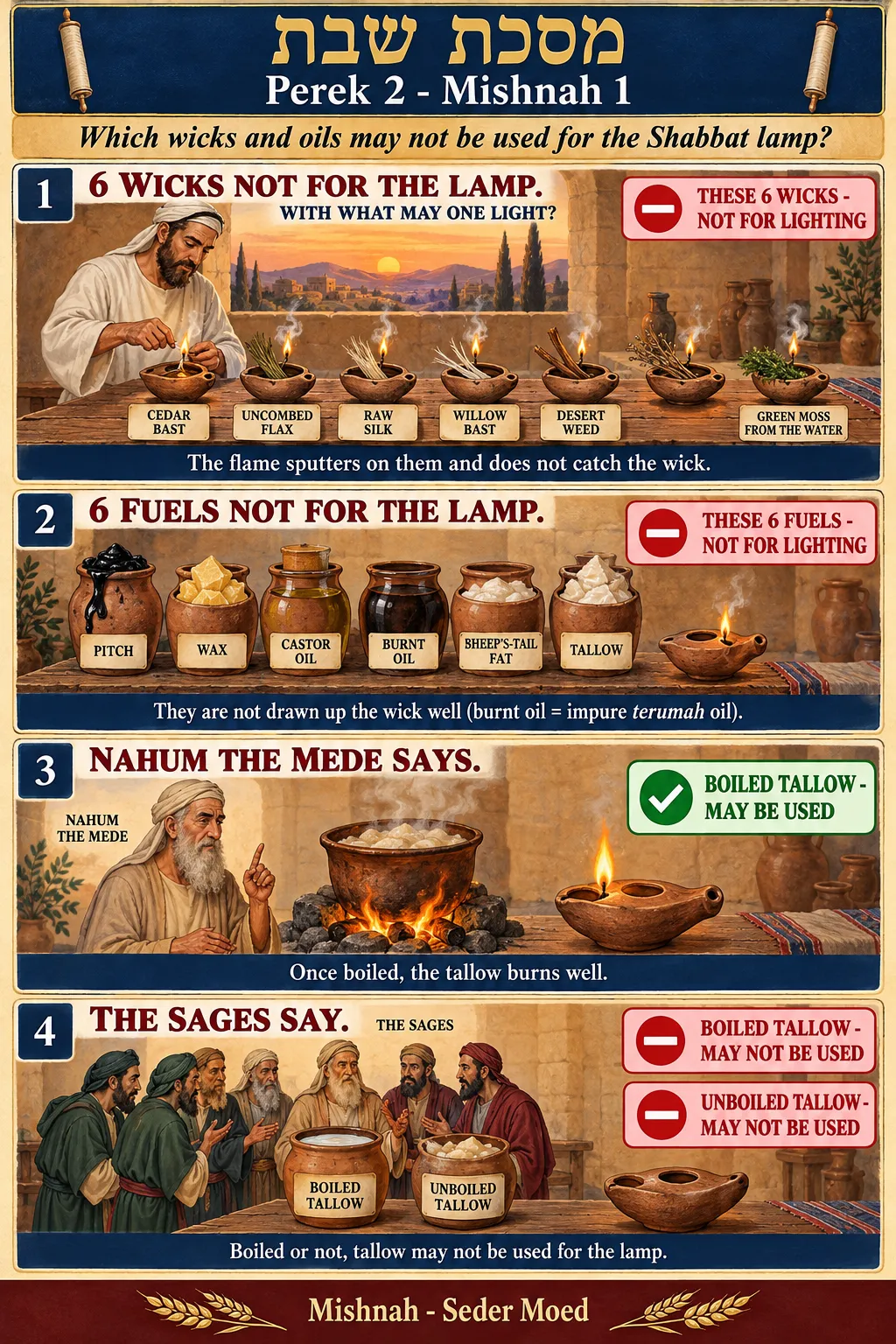
2:14 lawsWhich wicks and oils may not be used for the Shabbat lamp?
Infographic for Shabbos 2:1: WICKS AND FUELS THAT MAY NOT BE USED
בַּמֶּה מַדְלִיקִין וּבַמָּה אֵין מַדְלִיקִין. אֵין מַדְלִיקִין לֹא בְלֶכֶשׁ, וְלֹא בְחֹסֶן, וְלֹא בְכָלָךְ, וְלֹא בִפְתִילַת הָאִידָן, וְלֹא בִפְתִילַת הַמִּדְבָּר, וְלֹא בִירוֹקָה שֶׁעַל פְּנֵי הַמָּיִם.
This mishna cites a list of fuels and wicks that one may not use in kindling the Shabbat lights, either because their use might induce one to perform a prohibited labor on Shabbat or because they are not in keeping with the deference due Shabbat. The mishna begins by listing the materials that one may not use as wicks. That is followed by a list of the substances that one may not use as fuel. With what may one light the Shabbat lamp, and with what may one not light it? With regard to types of prohibited wicks, one may light neither with cedar bast [lekhesh], nor with uncombed flax [ḥosen], nor with raw silk [kalakh], nor with willow bast [petilat ha’idan], nor with desert weed [petilat hamidbar], nor with green moss that is on the surface of the water.
וְלֹא בְזֶפֶת, וְלֹא בְשַׁעֲוָה, וְלֹא בְשֶׁמֶן קִיק, וְלֹא בְשֶׁמֶן שְׂרֵפָה, וְלֹא בְאַלְיָה, וְלֹא בְחֵלֶב.
With regard to types of prohibited oils, one may light neither with pitch [zefet], nor with wax [sha’ava], nor with castor oil [shemen kik], nor with burnt oil [shemen sereifa], nor with fat from a sheep’s tail [alya], nor with tallow [ḥelev].
נַחוּם הַמָּדִי אוֹמֵר, מַדְלִיקִין בְּחֵלֶב מְבֻשָּׁל.
Naḥum the Mede says: One may light with boiled tallow.
וַחֲכָמִים אוֹמְרִים, אֶחָד מְבֻשָּׁל וְאֶחָד שֶׁאֵינוֹ מְבֻשָּׁל, אֵין מַדְלִיקִין בּוֹ:
And the Rabbis say: Both tallow that was boiled and tallow that was not boiled, one may not light with them.
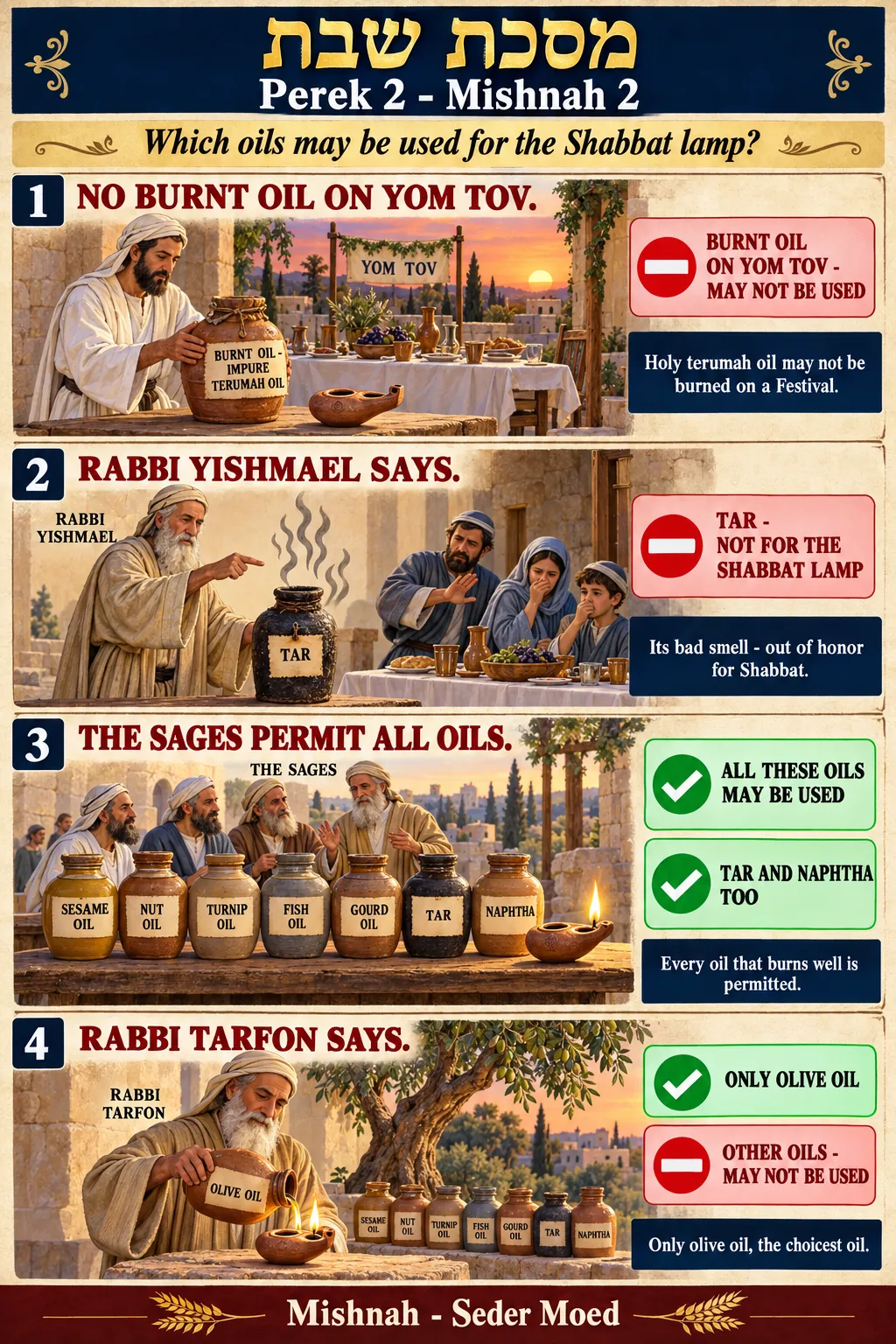
2:24 lawsWhich oils may be used for the Shabbat lamp?
Infographic for Shabbos 2:2: WHICH OILS MAY BE USED
אֵין מַדְלִיקִין בְּשֶׁמֶן שְׂרֵפָה בְּיוֹם טוֹב.
In continuation of the previous mishna, this mishna adds that one may not light with burnt oil on a Festival, as the Gemara will explain below. With regard to lighting Shabbat lamps, there were Sages who prohibited the use of specific oils.
רַבִּי יִשְׁמָעֵאל אוֹמֵר, אֵין מַדְלִיקִין בְּעִטְרָן, מִפְּנֵי כְבוֹד הַשַּׁבָּת.
Rabbi Yishmael says that one may not light with tar [itran] in deference to Shabbat because tar smells bad and disturbs those in the house.
וַחֲכָמִים מַתִּירִין בְּכָל הַשְּׁמָנִים, בְּשֶׁמֶן שֻׁמְשְׁמִין, בְּשֶׁמֶן אֱגוֹזִים, בְּשֶׁמֶן צְנוֹנוֹת, בְּשֶׁמֶן דָּגִים, בְּשֶׁמֶן פַּקּוּעוֹת, בְּעִטְרָן וּבְנֵפְט.
And the Rabbis permit lighting with all oils for lamps as long as they burn properly; with sesame oil, with nut oil, with turnip oil, with fish oil, with gourd oil, with tar, and even with naphtha [neft].
רַבִּי טַרְפוֹן אוֹמֵר, אֵין מַדְלִיקִין אֶלָּא בְשֶׁמֶן זַיִת בִּלְבָד:
Rabbi Tarfon says: One may light only with olive oil in deference to Shabbat, as it is the choicest and most pleasant of the oils.
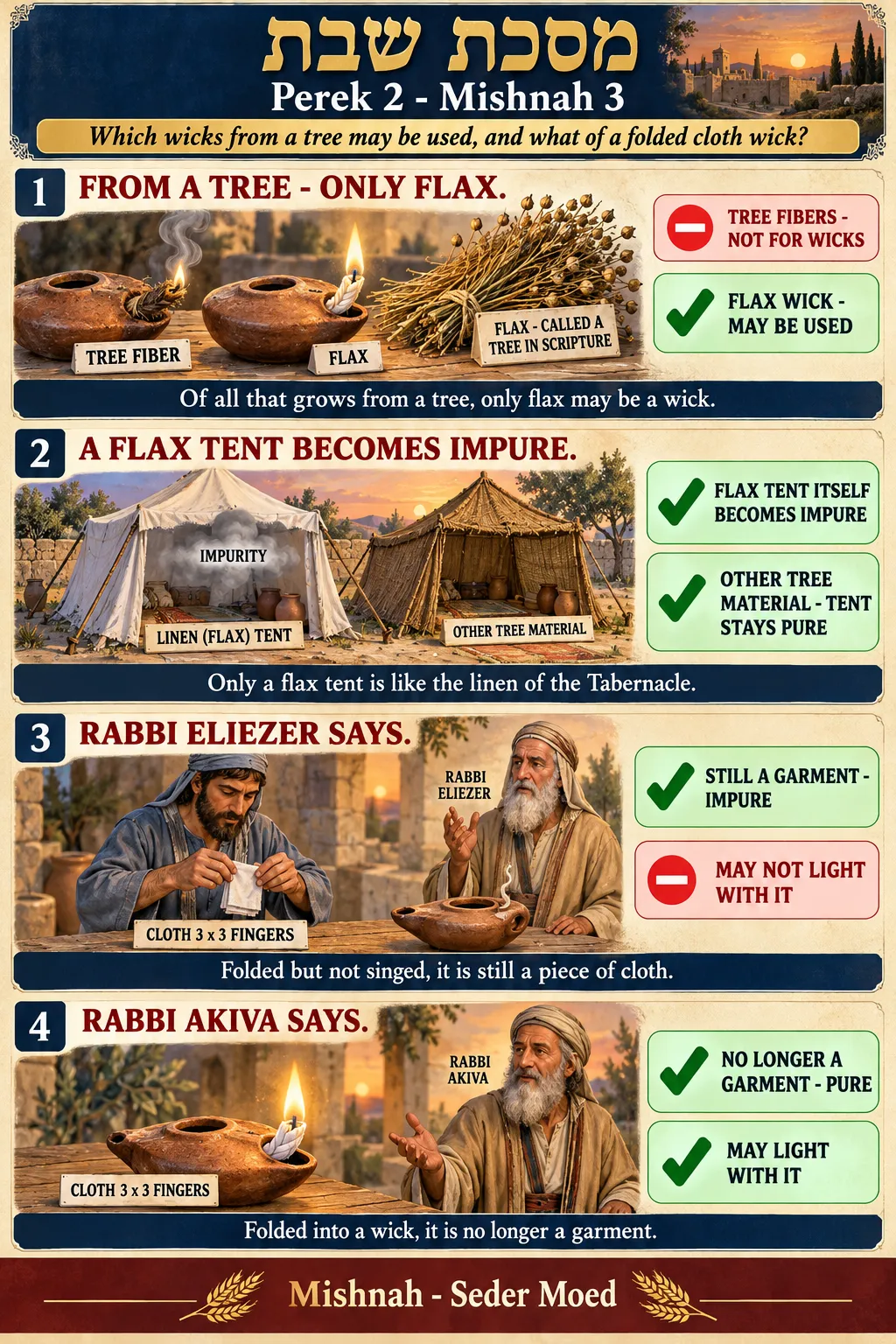
2:34 lawsWhich wicks from a tree may be used, and what of a folded cloth wick?
Infographic for Shabbos 2:3: TREE FIBERS AND A CLOTH WICK
כָּל הַיּוֹצֵא מִן הָעֵץ אֵין מַדְלִיקִין בּוֹ אֶלָּא פִשְׁתָּן.
Of all substances that emerge from the tree, one may light only with flax on Shabbat (Tosafot) because the other substances do not burn well.
וְכָל הַיּוֹצֵא מִן הָעֵץ אֵינוֹ מִטַּמֵּא טֻמְאַת אֹהָלִים אֶלָּא פִשְׁתָּן.
And of all substances that emerge from the tree, the only substance that becomes ritually impure with impurity transmitted by tents over a corpse is flax. If there is a dead body inside a house or a tent that is made from any materials that originate from a tree, everything in the house becomes ritually impure. However, only in the case of flax does the tent itself become impure.
פְּתִילַת הַבֶּגֶד שֶׁקִּפְּלָהּ וְלֹא הִבְהֲבָהּ, רַבִּי אֱלִיעֶזֶר אוֹמֵר, טְמֵאָה, וְאֵין מַדְלִיקִין בָּהּ.
The wick of a garment, i.e., cloth made into a wick for a lamp, that one folded it into a size and shape suitable for a wick, but did not yet singe it slightly in order to facilitate its lighting, Rabbi Eliezer says: This wick is ritually impure. With regard to the laws of ritual impurity, it can, like other garments, still become ritually impure and one may not light with it on Shabbat.
רַבִּי עֲקִיבָא אוֹמֵר, טְהוֹרָה, וּמַדְלִיקִין בָּהּ:
Rabbi Akiva says: It is ritually pure and one may even light with it on Shabbat.
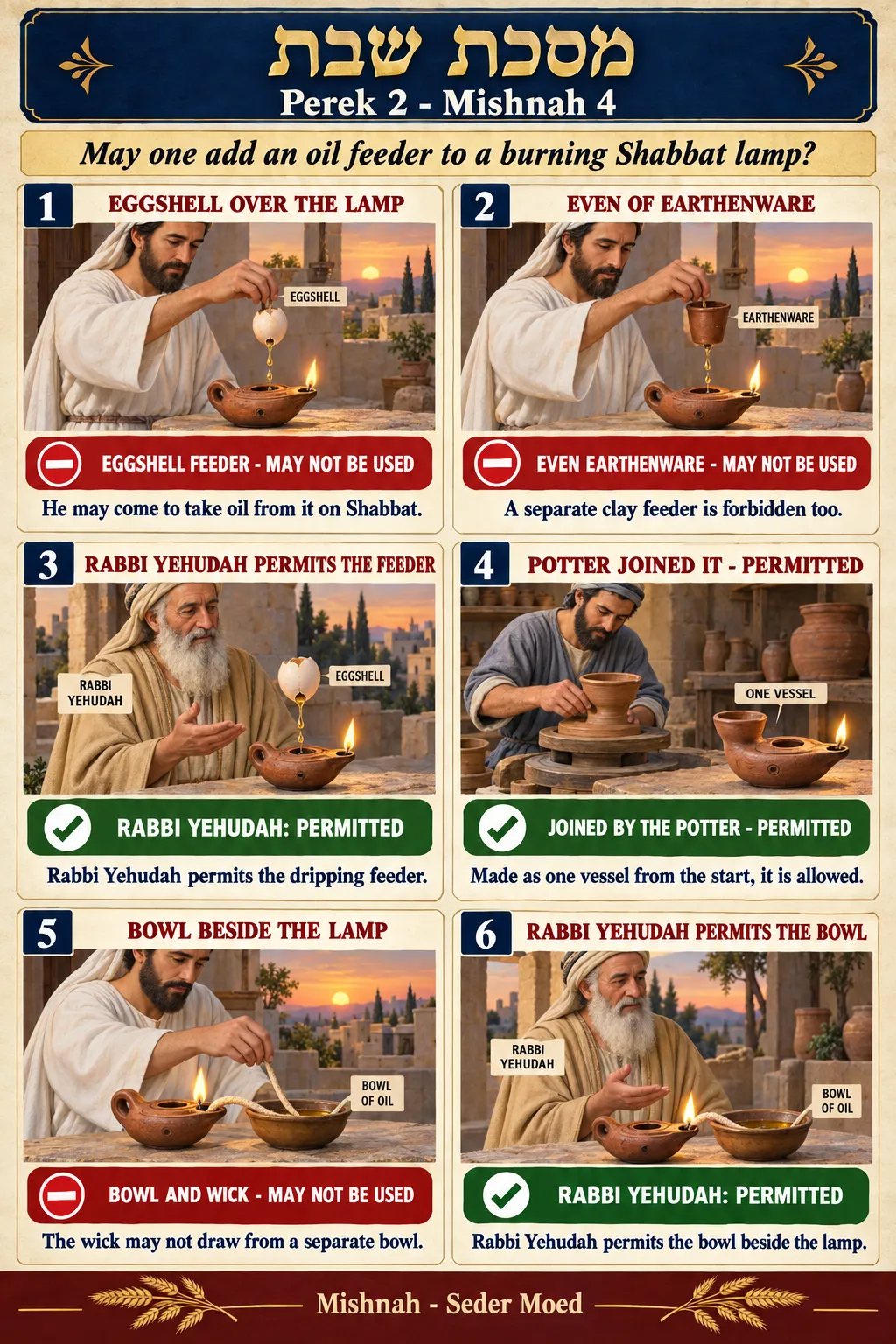
2:46 lawsMay one add an oil feeder to a burning Shabbat lamp?
Infographic for Shabbos 2:4: OIL FEEDERS FOR THE LAMP
לֹא יִקֹּב אָדָם שְׁפוֹפֶרֶת שֶׁל בֵּיצָה וִימַלְאֶנָּה שֶׁמֶן וְיִתְּנֶנָּה עַל פִּי הַנֵּר בִּשְׁבִיל שֶׁתְּהֵא מְנַטֶּפֶת,
The fundamental dispute in this mishna is with regard to the determination whether or not indirect acts of kindling and extinguishing fall within the parameters of the prohibition on Shabbat. The Rabbis said: A person may not pierce a hole in an eggshell and fill it with oil, and place it over the mouth of a lamp so that the egg will drip additional oil into the lamp and thereby extend the time that it burns.
אֲפִלּוּ הִיא שֶׁל חֶרֶס.
And this is the ruling even if it is not an actual egg but an earthenware vessel.
וְרַבִּי יְהוּדָה מַתִּיר.
And Rabbi Yehuda permits doing so.
אֲבָל אִם חִבְּרָהּ הַיּוֹצֵר מִתְּחִלָּה, מֻתָּר, מִפְּנֵי שֶׁהוּא כְלִי אֶחָד.
However, if the craftsman, who crafts ceramic vessels, attached the egg to the lamp from the outset, one is permitted to fill it with oil because it constitutes a single, large vessel.
לֹא יְמַלֵּא אָדָם אֶת הַקְּעָרָה שֶׁמֶן וְיִתְּנֶנָּה בְצַד הַנֵּר וְיִתֵּן רֹאשׁ הַפְּתִילָה בְתוֹכָהּ, בִּשְׁבִיל שֶׁתְּהֵא שׁוֹאֶבֶת.
The Rabbis decreed that a person may not fill a bowl with oil, and place it beside the lamp, and place the unlit head of the wick into the bowl so that it draws additional oil from the bowl and thereby extend the time that the lamp burns.
וְרַבִּי יְהוּדָה מַתִּיר:
And Rabbi Yehuda permits doing so.
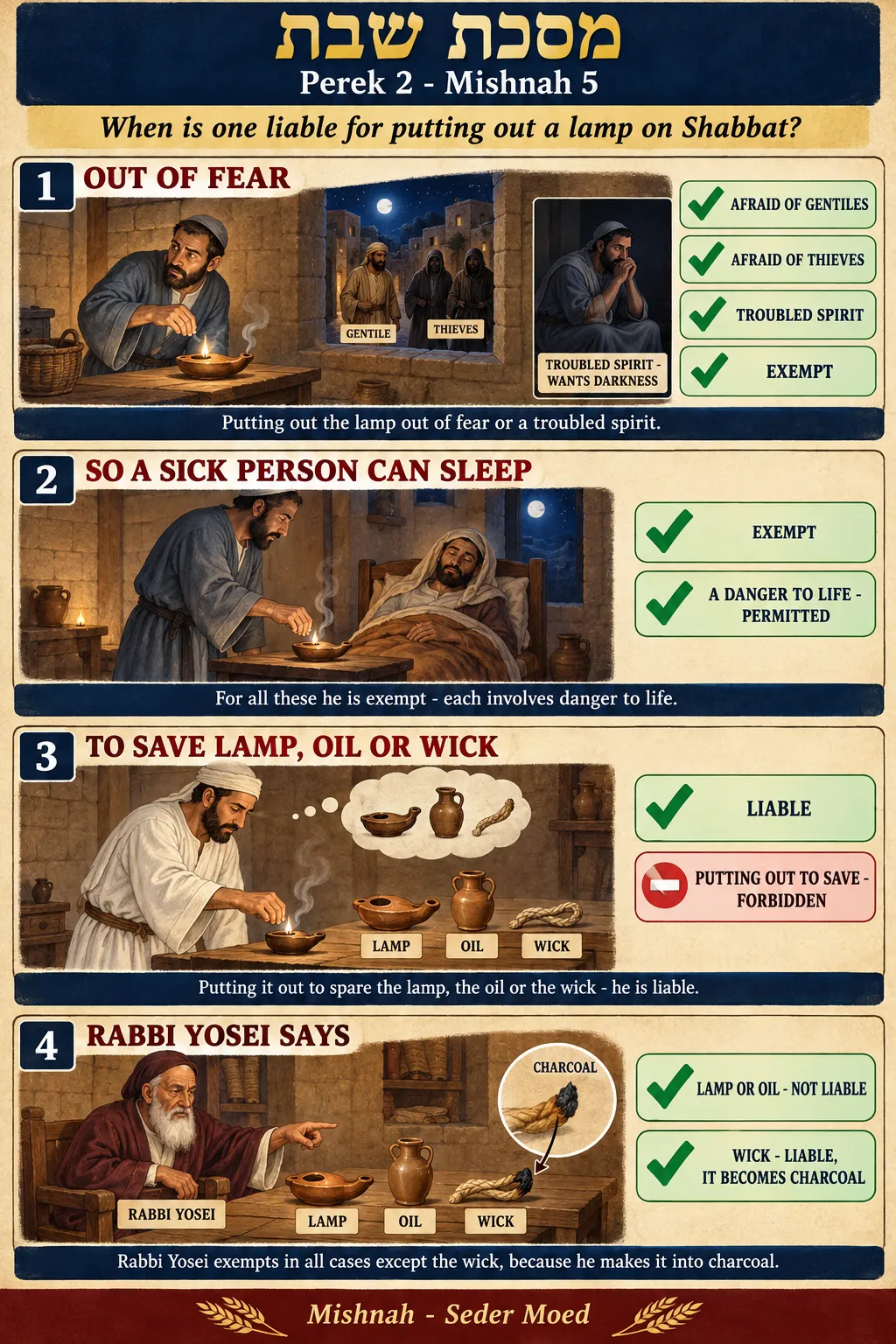
2:54 lawsWhen is one liable for putting out a lamp on Shabbat?
Infographic for Shabbos 2:5: PUTTING OUT THE LAMP
הַמְכַבֶּה אֶת הַנֵּר מִפְּנֵי שֶׁהוּא מִתְיָרֵא מִפְּנֵי גוֹיִם, מִפְּנֵי לִסְטִים, מִפְּנֵי רוּחַ רָעָה,
One who extinguishes the lamp on Shabbat because he is afraid due to gentiles, from whom he is hiding in his home, and due to thieves, or if one is afraid due to an evil spirit, i.e., he is depressed and prefers sitting in the dark,
וְאִם בִּשְׁבִיל הַחוֹלֶה שֶׁיִּישַׁן, פָּטוּר.
or if he extinguished the flame due to the sick person so that he will sleep, he is exempt.
כְּחָס עַל הַנֵּר, כְּחָס עַל הַשֶּׁמֶן, כְּחָס עַל הַפְּתִילָה, חַיָּב.
However, in a case where he extinguishes the flame in order to spare the lamp, spare the oil, or spare the wick, he is liable.
וְרַבִּי יוֹסֵי פּוֹטֵר בְּכֻלָּן חוּץ מִן הַפְּתִילָה, מִפְּנֵי שֶׁהוּא עוֹשָׂהּ פֶּחָם:
Rabbi Yosei exempts him in all of those cases, as in his opinion no labor prohibited by Torah law is being performed by extinguishing the flame, except for the case where he seeks to spare the wick. Only in that case is extinguishing a creative action because he makes the wick into charcoal by extinguishing the flame.
2:63 lawsWhich three mitzvos must women guard with special care?
Infographic for Shabbos 2:6: THREE MITZVOS OF THE HOME
עַל שָׁלשׁ עֲבֵרוֹת נָשִׁים מֵתוֹת בִּשְׁעַת לֵדָתָן, עַל שֶׁאֵינָן זְהִירוֹת בַּנִּדָּה
This mishna concludes the aggadic treatment of the topic of kindling the Shabbat lights. For three transgressions women are punished and die during childbirth: For the fact that they are not careful in observing the laws of a menstruating woman, and
וּבַחַלָּה
in separating ḥalla from the dough,
וּבְהַדְלָקַת הַנֵּר:
and in lighting the Shabbat lamp.
2:77 lawsWhat must one ask at home on Friday at dusk, and what may still be done at twilight?
Infographic for Shabbos 2:7: THREE THINGS ON FRIDAY AT DUSK
שְׁלשָׁה דְבָרִים צָרִיךְ אָדָם לוֹמַר בְּתוֹךְ בֵּיתוֹ עֶרֶב שַׁבָּת עִם חֲשֵׁכָה. עִשַּׂרְתֶּם. עֵרַבְתֶּם. הַדְלִיקוּ אֶת הַנֵּר.
There are three things a person must say in his home on Shabbat eve at nightfall and not before. The mishna elaborates: He should ask the members of his household, have you tithed the crop that required tithing? Have you placed the eiruv for joining the courtyards and joining the Shabbat borders? If you have done so, light the lamp in honor of Shabbat.
סָפֵק חֲשֵׁכָה סָפֵק אֵין חֲשֵׁכָה, אֵין מְעַשְּׂרִין אֶת הַוַּדַּאי,
The Sages stated a principle: If the time arrives on Friday when there is uncertainty whether it is nightfall and uncertainty whether it is not yet nightfall, one may not tithe the crop that has definitely not been tithed,
וְאֵין מַטְבִּילִין אֶת הַכֵּלִים,
and one may not immerse ritually impure vessels in a ritual bath to render them ritually pure,
וְאֵין מַדְלִיקִין אֶת הַנֵּרוֹת,
and one may not light the Shabbat lights.
אֲבָל מְעַשְּׂרִין אֶת הַדְּמַאי,
However, one may tithe demai, doubtfully tithed produce, which must be tithed due to mere suspicion.
וּמְעָרְבִין,
And one may place an eiruv
וְטוֹמְנִין אֶת הַחַמִּין:
and insulate the hot water to be used on Shabbat.
3
מסכת שבת · פרק ג
Mishnah Shabbos, Perek 3 · Seder Moed · today: mishnayos 1-3 of 6
6 mishnayos · shiur by mishnaportal.co.za
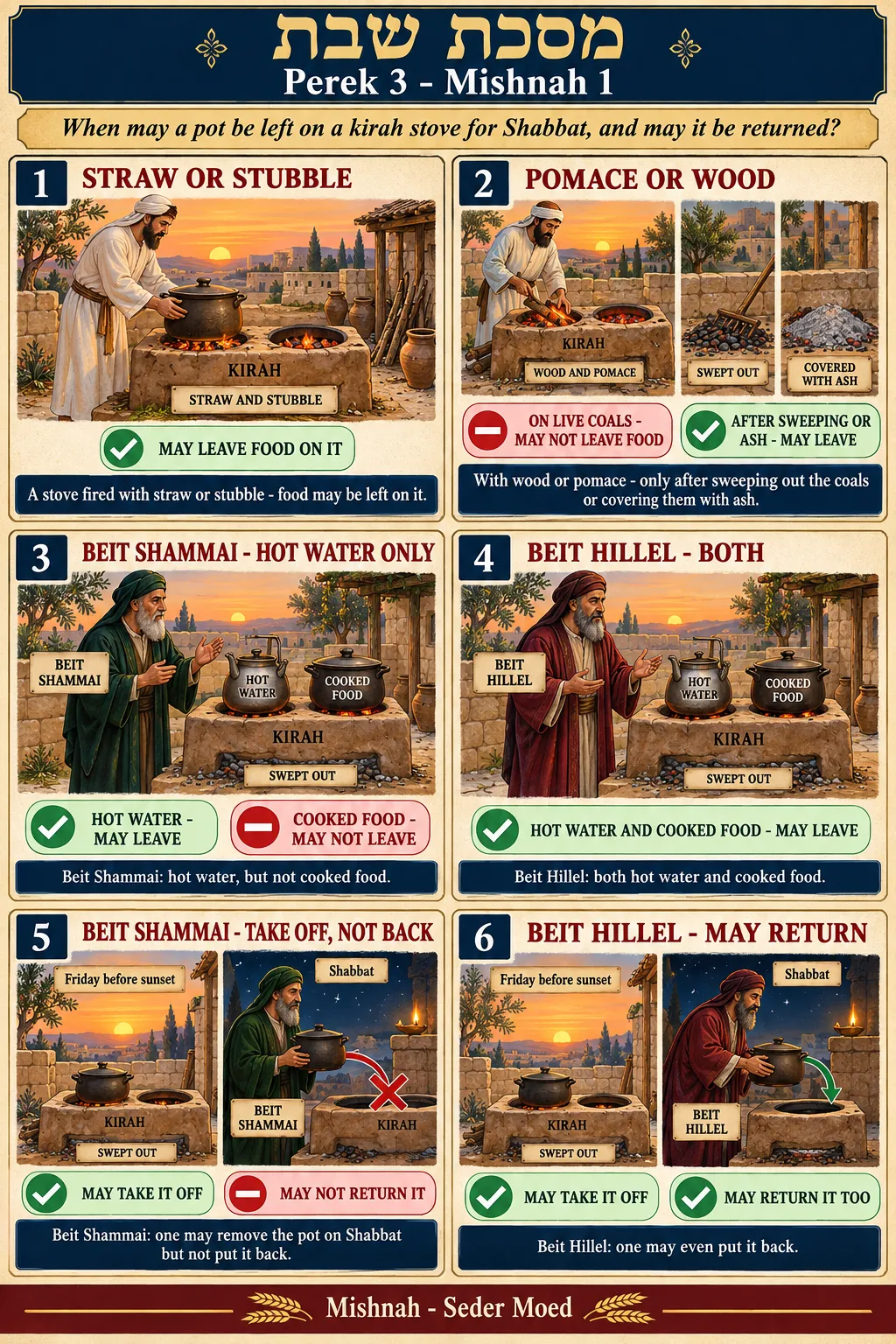
3:16 lawsWhen may a pot be left on a kirah stove for Shabbat, and may it be returned?
Infographic for Shabbos 3:1: FOOD ON THE KIRAH STOVE
כִּירָה שֶׁהִסִּיקוּהָ בְקַשׁ וּבִגְבָבָא, נוֹתְנִים עָלֶיהָ תַּבְשִׁיל.
With regard to a stove that was lit on Shabbat eve with straw or with rakings, scraps collected from the field, one may place a pot of cooked food atop it on Shabbat. The fire in this stove was certainly extinguished while it was still day, as both straw and rakings are materials that burn quickly.
בְּגֶפֶת וּבְעֵצִים, לֹא יִתֵּן עַד שֶׁיִּגְרֹף, אוֹ עַד שֶׁיִּתֵּן אֶת הָאֵפֶר.
However, if the stove was lit with pomace, pulp that remains from sesame seeds, olives, and the like after the oil is squeezed from them, and if it was lit with wood, one may not place a pot atop it on Shabbat until he sweeps the coals from the stove while it is still day or until he places ashes on the coals, so that the fire will not ignite on Shabbat.
בֵּית שַׁמַּאי אוֹמְרִים, חַמִּין אֲבָל לֹא תַבְשִׁיל.
Beit Shammai say: Even after one has swept away the coals, it is only permitted to place hot water on it, as it is sufficiently hot and does not require additional cooking, but not cooked food. Since, in general, one prefers that food will cook more, there is concern lest he come to ignite the fire by stoking the coals.
וּבֵית הִלֵּל אוֹמְרִים, חַמִּין וְתַבְשִׁיל.
And Beit Hillel say: Both hot water and cooked food may be placed.
בֵּית שַׁמַּאי אוֹמְרִים, נוֹטְלִין אֲבָל לֹא מַחֲזִירִין.
Beit Shammai say: One may remove a pot from the stove on Shabbat but may not return it.
וּבֵית הִלֵּל אוֹמְרִים, אַף מַחֲזִירִין:
And Beit Hillel say: One may even return it.
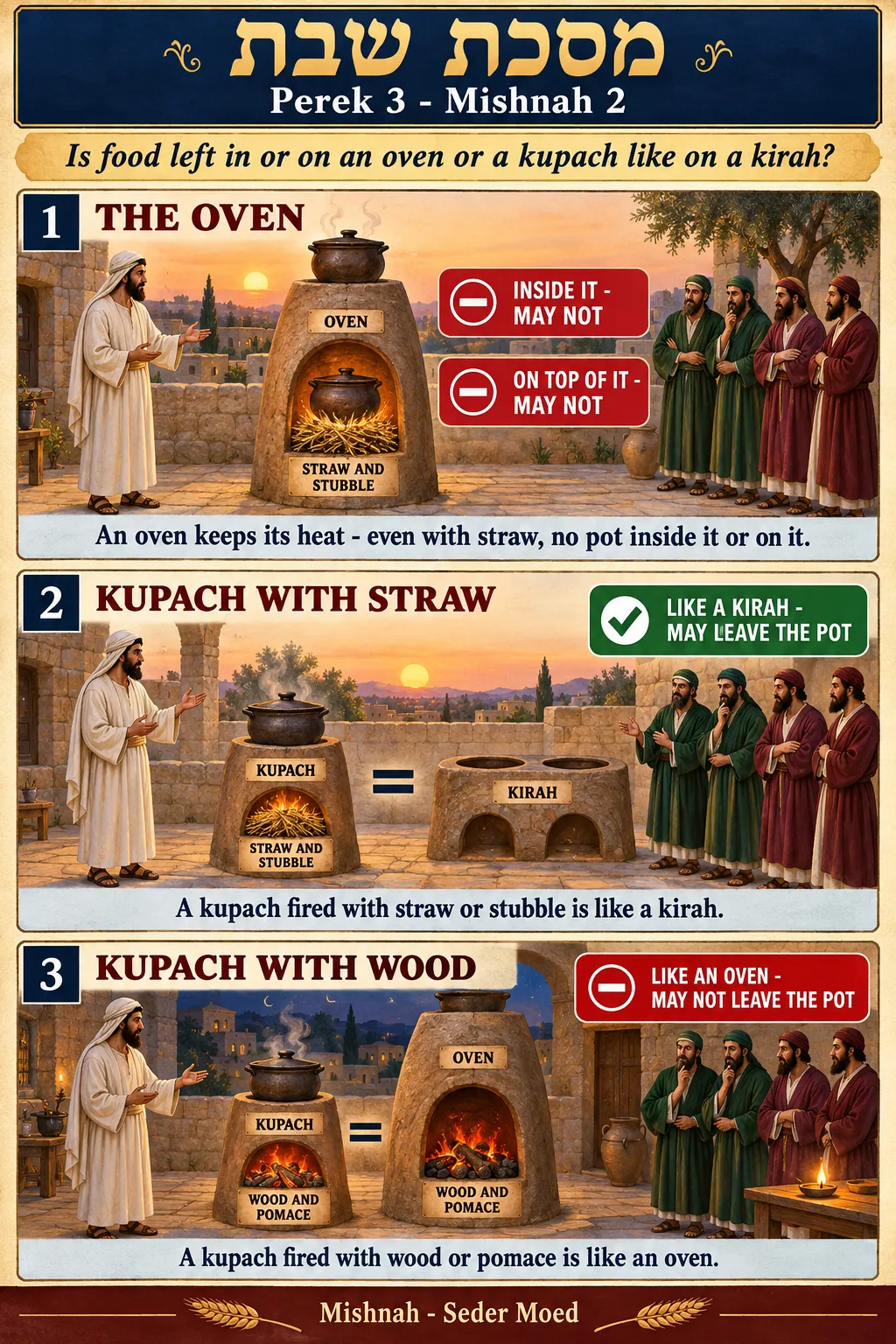
3:23 lawsIs food left in or on an oven or a kupach like on a kirah?
Infographic for Shabbos 3:2: THE OVEN AND THE KUPACH
תַּנּוּר שֶׁהִסִּיקוּהוּ בְקַשׁ וּבַגְּבָבָא, לֹא יִתֵּן בֵּין מִתּוֹכוֹ בֵּין מֵעַל גַּבָּיו.
The halakhot that were stated with regard to a stove were specific to a stove’s unique structure and the manner in which it retains heat. However, with regard to other baking apparatuses, i.e., an oven or a kupaḥ, there are different rules. The mishna delineates: An oven that they lit even with straw or rakings, one may neither place a pot inside it nor atop it on Shabbat.
כֻּפָּח שֶׁהִסִּיקוּהוּ בְקַשׁ וּבִגְבָבָא, הֲרֵי זֶה כְכִירַיִם,
Whereas a kupaḥ that was lit with straw or rakings, its legal status is like that of a stove, and one is permitted to place a pot atop it on Shabbat.
בְּגֶפֶת וּבְעֵצִים, הֲרֵי הוּא כְתַנּוּר:
If it were lit with pomace or with wood, its legal status is like that of an oven and it is prohibited to place a pot atop it on Shabbat.
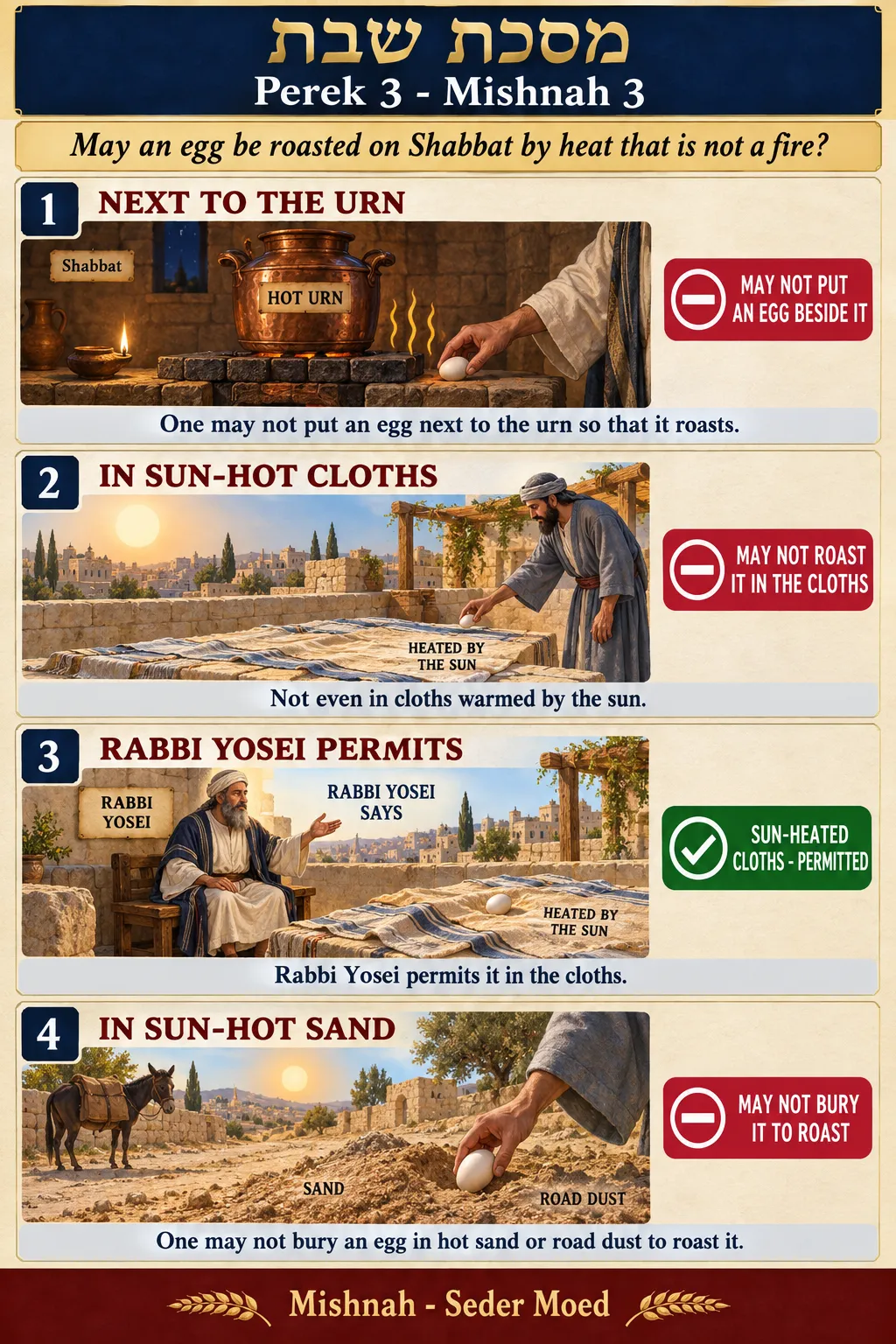
3:34 lawsMay an egg be roasted on Shabbat by heat that is not a fire?
Infographic for Shabbos 3:3: NO ROASTING AN EGG
אֵין נוֹתְנִין בֵּיצָה בְצַד הַמֵּחַם בִּשְׁבִיל שֶׁתִּתְגַּלְגֵּל.
In addition to the halakhot that deal with cooking on the fire on Shabbat, several related halakhot are discussed. The mishna says: One may not place a raw egg next to an urn full of hot water so that it will roast slightly.
וְלֹא יַפְקִיעֶנָּה בְסוּדָרִין.
And one may not even wrap it in cloths, i.e., one may not heat the egg inside cloths that were heated in the sun.
וְרַבִּי יוֹסֵי מַתִּיר.
And Rabbi Yosei permits doing so in that case.
וְלֹא יַטְמִינֶנָּה בְחֹל וּבַאֲבַק דְּרָכִים בִּשְׁבִיל שֶׁתִּצָּלֶה:
And, similarly, one may not insulate it in sand or in road dust that was heated in the sun so that it will roast. Although there is no actual cooking with fire here, it is similar to cooking and the Sages issued a decree to prohibit doing so.